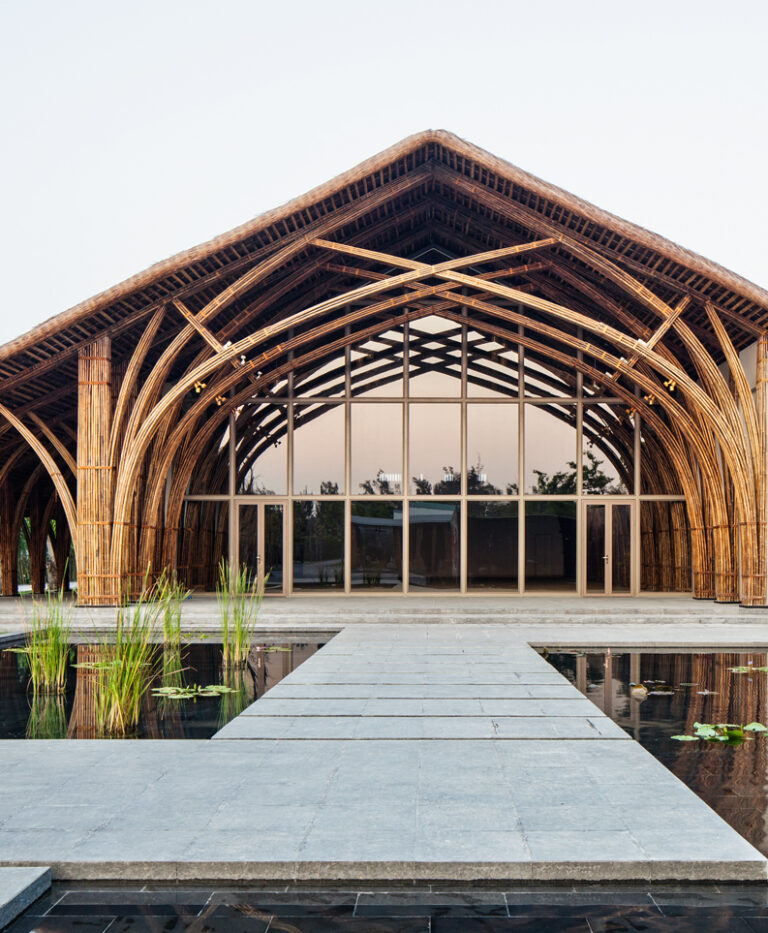
Bamboo’s Role in Earthquake-Resistant Design
Building Strength with Flexibility

In disaster-prone regions, particularly those susceptible to earthquakes, the need for resilient and sustainable building materials is paramount. Bamboo, with its unique properties, has emerged as a preferred material in these areas, offering a combination of strength, flexibility, and sustainability that makes it ideally suited for earthquake-resistant architecture.
Bamboo’s Natural Resilience
Bamboo is often referred to as “nature’s steel” due to its remarkable strength-to-weight ratio. It has the ability to bend without breaking, which is a critical characteristic in earthquake-resistant design. Unlike more rigid materials, bamboo can absorb and dissipate seismic energy, reducing the likelihood of structural collapse during an earthquake. This flexibility is due to the fibrous structure of bamboo, which allows it to withstand tensile forces that would typically cause more brittle materials to crack or break. Learn more about bamboo’s structural properties here

Earthquake-Resistant Design
Bamboo structures have been traditionally used in many earthquake-prone regions around the world, particularly in Asia and Latin America. The inherent flexibility of bamboo allows it to sway with the movement of the ground during an earthquake, much like how tall grass moves in the wind. This reduces the stress on the joints and connections within the structure, preventing catastrophic failure.
For example, Guadua Bamboo is commonly used in earthquake-resistant construction in Colombia and Ecuador. Studies have shown that bamboo-framed houses are more likely to survive an earthquake intact compared to those made from more rigid materials like concrete or brick. This has led to a resurgence in the use of bamboo in modern sustainable architecture, where it is being incorporated into hybrid designs that combine bamboo with other materials to enhance both resilience and aesthetics.
Case Studies and Practical Applications
In Nepal, after the devastating 2015 earthquake, bamboo was quickly adopted as a primary material for rebuilding efforts. Local architects and engineers used bamboo to construct temporary shelters that could withstand aftershocks and provide safe housing for displaced families. The success of these structures has led to increased interest in using bamboo for permanent housing solutions in earthquake-prone areas.
Another notable example is the Indonesian Earthquake-Resistant Bamboo House project, where bamboo is used as a core material in designing homes that can endure the frequent seismic activity in the region. The design incorporates traditional bamboo construction techniques with modern engineering practices, resulting in a structure that is both resilient and sustainable.

Bamboo’s Role in Sustainable and Resilient Architecture
Beyond its resilience to earthquakes, bamboo is also a sustainable building material. It grows rapidly, reaching maturity in just a few years, and can be harvested without causing long-term damage to the environment. Bamboo’s ability to sequester carbon dioxide further enhances its appeal as a green building material. When used in disaster-prone areas, bamboo not only provides a robust defense against natural disasters but also contributes to the reduction of greenhouse gases.
In conclusion, bamboo’s resilience in disaster-prone areas, particularly in earthquake-resistant architecture, makes it an invaluable material for sustainable and safe building practices. Its ability to absorb shocks, provide stability, and promote environmental sustainability positions bamboo as a critical component in the future of resilient architecture. As the world continues to face the challenges of climate change and natural disasters, materials like bamboo will play an increasingly important role in ensuring the safety and sustainability of our built environment.
Here’s the citation list for the blog post on bamboo in disaster-resilient architecture:
References:
1. Bamboo in Earthquake-Resistant Construction:
– Van der Lugt, Pieter. “Design Interventions for Stimulating Bamboo Commercialization.” *World Bamboo Organization*. Link.
– O’Connor, Ray. “Bamboo as a Building Material.” *ResearchGate*, 2020. Link
2. Guadua Bamboo and Earthquake Resistance:
– “Guadua Bamboo.” *Guadua Bamboo*. Link]
3. Case Studies – Bamboo in Nepal and Indonesia:
– “Building Bamboo Earthquake-Resistant Homes in Nepal.” *Habitat for Humanity*. Link
– “Bamboo Village Campsite.” *ArchDaily*, 2019. Link
4. Sustainable Architecture with Bamboo:
– Liese, Walter, and Michael Kohl. *Bamboo: The Plant and its Uses*. Springer, 2015.